
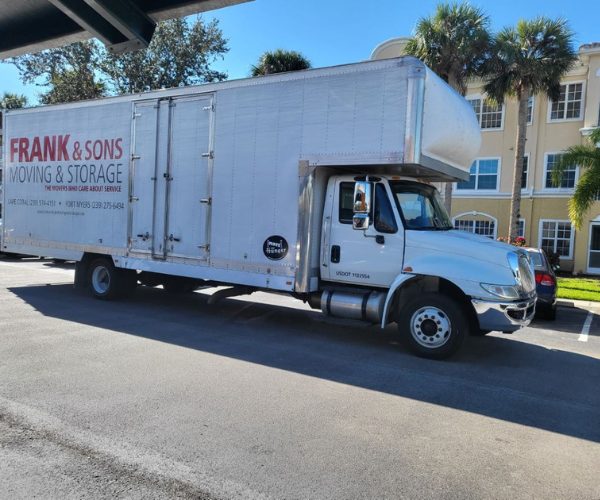
This guide to avoiding moving scams draws on the expertise of James Gravedoni of Cape Coral, FL — a national mover with over 50 years in the moving industry — combined with our team at Frank and Sons Moving and Storage, Southwest Florida’s hometown movers for over 40 years. Between us, we’ve seen every common moving scam in the book and personally helped recover the belongings of more than 30 families whose goods ended up trapped in brokerage warehouses, working side by side with state police to get those shipments released. The best way to protect yourself from moving fraud is knowing the red flag indicators before you sign anything.

2026 Moving Season Scam Alert
The 2026 moving season is here, and it’s the most dangerous stretch of the year for getting scammed. From now through summer, Southwest Florida sees a surge of out-of-state relocations, snowbirds heading back north, and last-minute residential and commercial moves — and that demand spike brings the scammers out in force. Every May we field calls from families whose deposits vanished or whose belongings were loaded onto an unmarked truck and driven to an unknown warehouse. Booking pressure makes people skip verification steps; that’s exactly when a fake mover wins. If your move is happening in the next 90 days, slow down for ten minutes and run every checklist below before sending a dime.
How To Avoid Mover Scams: Always Start With The Address
The first step in choosing a moving company is the address. A real mover has a real building. Pull their address up on Google Maps and street view. If it’s an empty lot, a UPS Store, or a random condo, walk away. James never uses a contractor or subcontractor on any of his own properties unless he can verify their address, and you should hold movers to that same standard. Stability is safety — legitimate companies keep the same address and the same phone over years. Search the phone number online; if the phone shows up tied to three different “moving” brand names, that’s a broker, not a mover. People who get scammed by moving companies almost always skipped this step.
Common Moving Scams And The Red Flag Indicators To Watch For
Below are the most common moving scams and red flags James has tracked over 50 years. Memorize them — these are the warning signs you must catch to avoid being scammed by moving brokers. A common trick is when a company tells you they have their “own storage facility” when they don’t run one at all; your goods get loaded onto a truck and dropped at a third-party brokerage warehouse under a different business name. That’s how shipments get lost, held hostage, or mixed in with dozens of other jobs. A real storage facility will have a name on the building and let you visit before you book.
- A quote that’s far below everyone else’s — bait pricing
- Large cash deposits demanded up front
- No physical address, or one that doesn’t match a real business
- Refusal to do an in-home or video survey
- No USDOT number, or a USDOT that doesn’t match the company name
- Different company name on the truck than the one you hired
- Generic email address (Gmail/Yahoo) instead of a company domain
- Pressure to sign blank or incomplete paperwork
- Reviews that all sound alike or are clustered on the same date
- Peak-season pressure — “Book today or you lose your spot for 2026” is a classic high-pressure scam tactic
How To Avoid Scams When Booking: Verify Before You Sign
Verification is the single best tool to avoid scams when hiring a mover. Run through this checklist before you ever hand over a deposit. Each item takes minutes but can save you thousands and the heartbreak of losing irreplaceable items. In peak 2026 moving season, build in an extra day for verification — anyone who refuses to wait 24 hours for you to check their license isn’t a mover you want.
- Verify the address on Google Maps and street view
- Confirm USDOT and MC numbers on the FMCSA SAFER website
- Call the phone number multiple times — the same company should answer
- Get the storage warehouse name and address in writing
- Read recent reviews, not just the five-star ones from years ago
- Use a local mover you can drive to and meet in person
- Get at least three written, in-home or video estimates before deciding
- Ask to see proof of insurance and workers’ comp
- Confirm the truck on move day matches the company you hired
What To Do If You’re Already Being Scammed
If your goods are already being held, you are not powerless. Document everything in writing. File a complaint with FMCSA, your state attorney general, and the BBB. Contact your state police — James has helped families get truckloads released from warehouses by working that exact paper trail. Save every text, email, and bill of lading; photograph any inventory you have. The faster you escalate, the better your odds of getting your belongings back. Our long distance moving team and residential moving crew handle dozens of recovery moves a year for families burned by bad operators — peak-season recovery cases jump every spring.
FAQ: Avoiding Moving Scams
How to avoid mover scams?
Verify the mover’s physical address, USDOT/MC numbers on FMCSA SAFER, and confirm the same phone number has been tied to the same company name for years. Get an in-home estimate and never pay a large cash deposit up front.
What are the most current 2026 scams?
(1) Lowball binding estimates that balloon on move day, (2) hostage-load scams where the truck refuses to unload until you pay extra, (3) fake “storage” handoffs to a brokerage warehouse, (4) phantom companies with no real address, and (5) deposit-and-disappear schemes from movers that never show up — all spike during the 2026 peak moving season.
What are red flags to watch for in movers?
No physical address, generic email, refusal to do an on-site or video survey, large cash deposits, missing USDOT, and a truck that shows up with a different company’s name on it. Any one of these means stop and re-verify.
How early should I book in the 2026 moving season?
For May–August 2026 moves, book at least 4–6 weeks out. Last-minute bookings are when most scams happen, because pressure overrides verification. Reputable Southwest Florida movers fill up fast in peak season; if a company has same-day availability and an unbelievable price, that’s your warning sign.
The Bottom Line
A moving company that can’t be found on a map can’t be trusted with your life’s belongings — and that’s doubly true heading into the 2026 moving season. For SWFL homeowners, stick with established locals — see our full-service moving, specialty moving, and commercial moving options, or visit our contact page for a real quote from a real address. You can also verify any U.S. mover’s license on the FMCSA SAFER system before you sign.
About the expert: James Gravedoni of Cape Coral, Florida is a national mover with more than 50 years of hands-on experience in the moving and storage industry, including recovering customer goods from brokerage warehouses across the country.
How To Verify A Moving Company: Trusted Resources
Use these official resources before you sign anything. Each one is free and takes a few minutes to check.
- FMCSA SAFER System — Look up any U.S. interstate mover by USDOT or MC number: safer.fmcsa.dot.gov
- FMCSA Protect Your Move — Federal consumer guide on rights, paperwork, and dispute filing: fmcsa.dot.gov/protect-your-move
- Florida FDACS Mover Search — Verify any Florida intrastate mover’s IM license: fdacs.gov/Business-Services/Movers
- Better Business Bureau — Check accreditation, complaints, and ratings: bbb.org
- FTC Report Fraud — Report a moving scam directly to the Federal Trade Commission: reportfraud.ftc.gov
- AMSA / Moving.org — Trade association directory of vetted ProMovers: moving.org